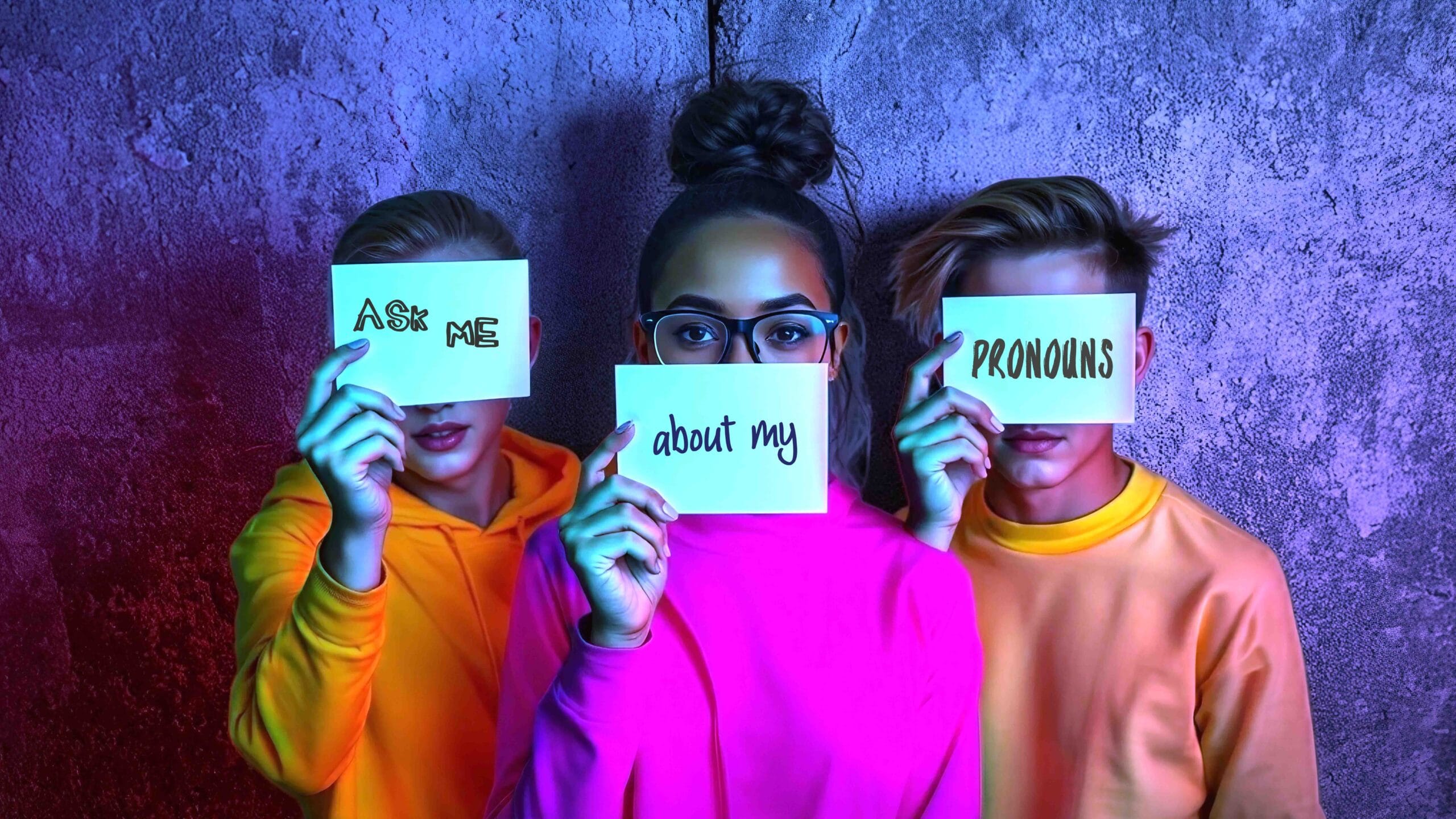

If you’re trying to reach them with the gospel, you can’t ignore the lenses they’re using. Miss the lenses, and you miss the point. Here are three of the biggest.
1. Truth Is Relative
“My truth” > “the truth.”
Say “absolute truth” too fast, and you’ll trigger flashbacks of toxic dogma videos they scrolled past last night. Gen Z has grown up in an environment where tolerance is king, personal freedom is queen, and truth has been privatized. Everyone gets to own a piece of it, and no one dares say theirs is better than someone else’s.
But despite all this, Gen Z is still searching for truth—they just don’t believe it exists in absolute terms.^1 They’d rather uphold tolerance and acceptance than be labeled “intolerant” by clinging to objective standards. Ironically, this leaves them in a bind. They care deeply about social justice but don’t have an anchor for deciding what justice even means. How do you call out evil when everyone defines “evil” differently?
The Bible doesn’t shy away from this question. Pilate asked Jesus in John 18:38, “What is truth?” Matthew 11 and John 3 record people asking similar questions. Gen Z is not the first to wrestle with this tension. Our task is to show how God offers a definition of truth that isn’t oppressive but liberating. The gospel doesn’t squash freedom—it shows us the only foundation sturdy enough to make it possible
Gen Z has grown up in an environment where tolerance is king, personal freedom is queen, and truth has been privatized.
2. Trust Is Scarce
Gen Z doesn’t believe everything they see—and why should they? They know how curated Instagram feeds are.^2 They’ve watched influencers fake cry on YouTube. They’re savvy enough to recognize that people can run multiple social media accounts showing completely different personas. They’ve also seen celebrity pastors, politicians, and public figures exposed for living double lives.
All of that makes them skeptical—sometimes to the point of exhaustion. The question they’re really asking is, “Can I trust you?”
This is why authenticity is the new currency.^3 For Gen Z, credibility is proportional to how transparent and genuine you are. This lands hard on the church. Many describe Christians as hypocritical—the opposite of authentic and trustworthy. Which means the trust question doesn’t stop with people. It extends to God: Can I trust that He exists? Can I trust that He is good? Can I trust that Jesus is who He said He is?
Here’s where we take notes from Hebrews 13:8—Jesus Christ is the same yesterday, today, and forever. God isn’t a bait-and-switch marketer. He doesn’t rebrand. He keeps His promises. But Gen Z won’t be convinced by slogans. They need to see it lived out in us and discover it through Scripture and conversation. That requires leaders who will listen before preaching, and letting students process their doubts without rushing to shut them down.
3. Everyone’s Oppressed (So Everyone’s Guilty)
Finally, Gen Z sees the world through the lens of oppression. They’ve been raised in a cultural soup heavily seasoned with Marxist categories: oppressor vs. oppressed. This means they’re hyper-aware of injustice. They see racism, sexism, and inequality everywhere—and sometimes in places older generations would never think to look.^4
That awareness can be a gift. It fuels empathy. Gen Z wants to stand with the marginalized and call out abuse of power. But it also creates a kind of toxic empathy that leaves them drained. If everyone’s oppressed, then everyone’s guilty. If every system is broken, then no one is trustworthy- including the church
The gospel cuts through this mess by naming both the problem and the solution. Yes, oppression is real because sin is real. But guilt isn’t spread in random waves like social media outrage—it’s foundational and universal. We’re all fallen. That means no generation, no identity group, and no person is immune. And that’s exactly why Christ’s redemption matters. He doesn’t just call us to see injustice; He calls us to live justly by rooting our lives in His righteousness.
For Gen Z, authenticity is the new currency.
Why This Matters
If you’re a leader trying to reach Gen Z without understanding these lenses, it’s like preaching in English to a crowd that only speaks meme. You might get polite nods, but the message won’t land.
- Truth: Don’t just declare it. Show how God’s truth makes freedom and justice possible.
- Trust: Don’t just demand it. Earn it by living authentically and pointing to the unchanging faithfulness of God and be honest about your own mistakes or weaknesses (when appropriate.
- Oppression: There’s a third option to denying it or seeing it everywhere. Affirm what they see, show them all the ways the church has traditionally and continues to care for the poor and marginalized, then point them to the cross as the only place where guilt and grace collide.
Gen Z isn’t rejecting the gospel—they’re listening to a world that offers a twisted one while immersed in a church that doesn’t seem to speak their language. If we want to reach them, we don’t need to water down the message. We need to make sure we’re actually speaking to their world.
Because when the gospel collides with Gen Z’s questions, it doesn’t just make sense, it provides a harbor of peace and hope among a sea of constant outrage and anxiety.
Footnotes
1. Barna Group, Gen Z: The Culture, Beliefs and Motivations Shaping the Next Generation (Ventura, CA: Barna Group, 2018)
2. Greg Lukianoff and Jonathan Haidt, The Coddling of the American Mind: How Good Intentions and Bad Ideas Are Setting Up a Generation for Failure (New York: Penguin Press, 2018), 154.
3. Jean M. Twenge, iGen, (New York: Atria Books, 2017) 235.
4. Rev. Ben Johnson, “Half of Gen Z supports Marxism/socialism. Here’s why.” Action Institute, October 23, 2020, https://rlo.acton.org/archives/117396-half-of-gen-z-supports-marxism-socialism-heres-why.html